When Tom Brokow called the generation that fought in World War II "the Greatest Generation," it was a silly exaggeration. I am strongly tempted to call the Baby Boomers (the children raised by "the Greatest Generation") the worst generation, the generation that will destroy this country before passing into history, which would also be an exaggeration -- but not sillier than Brokaw's exaggeration. I won't go into details right now, because if I start, I'll go on a rant for pages and pages; besides, you either see what I mean in every news broadcast, or you would never see it even after my rant.
So why bring this up now? The story from CNN about Baby Boomer divorce rates is just too emblematic. During 37 years of marriage, the couple highlighted in the story "slowly grew apart." That's a poor excuse even for couples in their twenties, but for a couple to have been married for 37 years and still not realize that marriage is about sacrificial love really demonstrates that they haven't "grown" at all: they are still adolescents. It is no longer cute to be an adolescent when you're in your sixties!
When the generation that refused to grow up finally passes away, they're going to leave behind a huge mess for their grandkids and great-grandkids to clean up. Those generations will need to grow up fast -- but without the benefit of adult role models.
Sunday, June 24, 2012

Friday, June 22, 2012
Does This Change How You Feel About Lebron?
That is the question already being asked on sports talk radio, of course, after last night's win by Miami. It is -- or at least it should be -- a really stupid question.
Lebron James had been unquestionably popular until he made "The Decision," a bizarre, narcissistic television event that seemed almost calculated to maximize the pain felt by Cleveland fans. No doubt they would have been hurt by his decision to leave no matter how it had been handled, but this seemed to give that special, extra twist to the dagger. To many people, including those like me who are not especially fans of Cleveland or even the NBA, this seemed emblematic of so much that is wrong with professional sports today. Lebron's popularity took a big hit; he was no longer the good guy of the NBA, he was the villain.
Two things need to be stated right away at this point. The first is that although he looked like a royal jerk in the way he treated his former hometown, he is by no means one of the worst guys in the NBA, let alone sports. What he did was not a misdemeanor, let alone a felony; unlike the well-known actions of several other athletes, this wasn't a crime at all. Nor was it cheating, like the use of performance-enhancing drugs (or for that matter, a pitcher putting pine tar on the baseball). By these more serious standards, he's still one of the league's "good guys."
The other is that some people have been critical of his play, particularly late in playoff games. On the other hand, he has been the league MVP 3 times. He isn't "the next Michael Jordan," but then nobody is. What he is is a future Hall of Famer, and everyone knows it.
With all that in mind, exactly how should the fact that he has won a championship change people's minds about him? Are those who thought him a narcissistic jerk supposed to think the ring makes him a class act?
Lebron James had been unquestionably popular until he made "The Decision," a bizarre, narcissistic television event that seemed almost calculated to maximize the pain felt by Cleveland fans. No doubt they would have been hurt by his decision to leave no matter how it had been handled, but this seemed to give that special, extra twist to the dagger. To many people, including those like me who are not especially fans of Cleveland or even the NBA, this seemed emblematic of so much that is wrong with professional sports today. Lebron's popularity took a big hit; he was no longer the good guy of the NBA, he was the villain.
Two things need to be stated right away at this point. The first is that although he looked like a royal jerk in the way he treated his former hometown, he is by no means one of the worst guys in the NBA, let alone sports. What he did was not a misdemeanor, let alone a felony; unlike the well-known actions of several other athletes, this wasn't a crime at all. Nor was it cheating, like the use of performance-enhancing drugs (or for that matter, a pitcher putting pine tar on the baseball). By these more serious standards, he's still one of the league's "good guys."
The other is that some people have been critical of his play, particularly late in playoff games. On the other hand, he has been the league MVP 3 times. He isn't "the next Michael Jordan," but then nobody is. What he is is a future Hall of Famer, and everyone knows it.
With all that in mind, exactly how should the fact that he has won a championship change people's minds about him? Are those who thought him a narcissistic jerk supposed to think the ring makes him a class act?
Wednesday, June 20, 2012
Two Common Scientific Misconceptions
1. Surprisingly many people think that the rubber in tires will insulate your car, and this will protect you from lightning.

Come on! That electric spark has just jumped across a mile or more of air, and you think that 4 or 5 inches of tire are going to stop it? Besides which the tire is usually wet, and water, of course, conducts electricity just fine.
Cars actually still do a good job of protecting people from lightning, but for a different reason. Most cars still have a metal frame, and that metal frame is a great conductor of electricity. As a result, almost all the current is conducted away from the people in the car, although some current can still go through them.
All this assumes that the car has a metal frame. In cars with less metal, so they will be lighter and more fuel efficient, lightning is a more significant risk.
2. Many people also think that hot water kills germs. Actually, many germs love warm temperatures. They might be killed by being held for a while at temperatures at or above boiling, which is how surgical instruments are sterilized in an autoclave and part of the reason we cook food. Think about it, though: If you put a raw egg into a sink full of "hot water" like you use to do dishes, then remove it after 10 minutes, what do you have? A wet, warm, raw egg. Water you can put your hands in will not kill germs.
Is there a reason for using hot water, then? Yes! Hot water makes it easier for the detergent to help dissolve the dirt (or food particles, or whatever). This is like what happens when you try to dissolve a spoonful of sugar in a drink: it dissolves much better in hot coffee than in iced tea. So hot water helps you get things clean, and if they're clean, they should not have anything for the germs to grow on. If you want them really sterile, though, you have to add something like bleach that will kill the germs.

Come on! That electric spark has just jumped across a mile or more of air, and you think that 4 or 5 inches of tire are going to stop it? Besides which the tire is usually wet, and water, of course, conducts electricity just fine.
Cars actually still do a good job of protecting people from lightning, but for a different reason. Most cars still have a metal frame, and that metal frame is a great conductor of electricity. As a result, almost all the current is conducted away from the people in the car, although some current can still go through them.
All this assumes that the car has a metal frame. In cars with less metal, so they will be lighter and more fuel efficient, lightning is a more significant risk.
2. Many people also think that hot water kills germs. Actually, many germs love warm temperatures. They might be killed by being held for a while at temperatures at or above boiling, which is how surgical instruments are sterilized in an autoclave and part of the reason we cook food. Think about it, though: If you put a raw egg into a sink full of "hot water" like you use to do dishes, then remove it after 10 minutes, what do you have? A wet, warm, raw egg. Water you can put your hands in will not kill germs.
Is there a reason for using hot water, then? Yes! Hot water makes it easier for the detergent to help dissolve the dirt (or food particles, or whatever). This is like what happens when you try to dissolve a spoonful of sugar in a drink: it dissolves much better in hot coffee than in iced tea. So hot water helps you get things clean, and if they're clean, they should not have anything for the germs to grow on. If you want them really sterile, though, you have to add something like bleach that will kill the germs.
Sunday, June 17, 2012
Writing and Agriculture: A Puzzle Solved?

Paleontologists tell us that modern humans (Homo sapiens) have been around for something like 200,000 years, and that evidence of "behavioral modernity" goes back at least 50,000 years. OK, no problem. Archaeologists tell us that writing was invented independently several times (at least in Egypt, Mesopotamia, China, and Central America) and that agriculture was invented independently at least twice (in Eurasia and in the Americas). Both kinds of inventions took place within the past 10,000 years. Archaeologists believe that these had to be independent events, since the ancestors of the American Indians arrived millenia before the invention of agriculture and there is no strong evidence for genetically or culturally significant contact with the "Old World" from that time until the arrival of Columbus.
Does this seem odd to anyone else?
I can understand that the invention of writing should follow, probably "fairly quickly", the invention of agriculture, but.... For no one to think of agriculture anywhere for at least 40,000 years and then almost simultaneously invent it in several regions all isolated from each other sounds ... fishy.
This, of course, gives rise to all manner of wild ideas:
- Maybe the human species really isn't that old, just like young-Earth creationists say!
- Maybe ideas like agriculture and writing were remembered from some much earlier civilization -- like Atlantis! Who knows how advanced this lost civilization might have been?
- Maybe space aliens brought this knowledge to primitive man?
Let's dispose of these quickly.
- Young-Earth creationism has so much scientific evidence stacked against it that accounting for it would require either that God directly put lying fossils into the rocks, or that He permitted the Devil to do this. Such an assertion might be plausible of a pagan god like Loki, but it is simply blasphemous when applied to the Christian God.
- Societies present during and before the Ice Age may have had poetry and art, and many of their settlements may have been flooded when the ice sheets retreated. They could not have had a technically advanced civilization like ours, though, or they would have produced much more garbage, like we do. We would have found their dumps. They would probably have also taken all the easily available mineral resources. Likewise, they could not have had agriculture. Archaeology and genetics can trace the domestication of plants.
- Quite aside from the trouble they would have had getting here, if aliens brought our ancestors technology and science, they did such a really crappy job of it that it boggles the mind. Agriculture, writing, and technology do not show signs of having sprung up instantly in mature form, they way they do when outsiders bring a fully-formed civilization to the natives.
How can we explain the synchronicity, then?
Here's an idea that just occurred to me today: Maybe we owe it all to dogs. Dogs were apparently the first animals to be domesticated, and their domestication began before the ancestors of the American Indians crossed the Bering Land Bridge. If a society already has the idea of domesticating animals, it can only be so long before they get the idea of domesticating plants, too, and agriculture can support the population density necessary for ideas like writing to be needed.

So thanks, Elvis!
Saturday, June 16, 2012
H.P. Lovecraft
I finally made it to the end of The Mountains of Madness, leading to two final observations about the art of H.P. Lovecraft.
1. He really seems to have had some sort of deep-seated fear of the sea life. Most of his monsters live in the sea or have physical characteristics that seem to be inspired by sea creatures. Cthulhu and Dagon may be the most "human-like" of his monsters, but Cthulhu has tentacles and Dagon is explicitly "half-fish". The "Old Ones" of The Mountains of Madness sound basically like sea cucumbers stood upright and provided with wings and (again) tentacles, and the shoggoth sound vaguely like box jellies -- which, oddly enough, have true eyes.

Most people, however, would not react in a Lovecraftian way. We may fear jellyfish, but only because they may sting us; we are not driven insane by the mere fact of their existence. If we could go back in time a half billion years, we would find creatures in the sea that would look to anyone but a specialist like some of the jellyfish found today -- but this inspires only mild curiosity, not existential despair.
2. In addition to his odd hang-up with sea life, Lovecraft seems to have been completely unaware of what really does make for an unsettling image. Of course, he can't really be blamed for not having a fully developed idea of the "Uncanny Valley", but even before that name was coined many artists and writers had a strong intuitive feel for it.
So, for example, look at these dolls. They're pretty, charming, and, at least to me, kind of creepy.

Storytellers have known this for years; it's why there are so many stories about haunted dolls, some of which are claimed to be true. No, I am not saying that these claims really are true, but the fact that they can be presented as such with the expectation that they will be believed and the fact that they in fact are accepted by a number of people are indications that these are touching on something in our common psychological make-up. No doubt magical dolls, like the ones famous from Voodoo, have a similar origin.
So what kind of monsters does Lovecraft give us? Are they soulless parodies of human beings? Are they manlike enough to make us first think they really are human, only some indefinable property is vaguely wrong, hinting that the spirit animating them is not, after all, human? Nope; they're more likely to be colossal (and aeons-old!) shucked oysters, with all their sliminess and seeming formlessness, or perhaps a scallop without its shell, as implied by the presence of odd eyes.
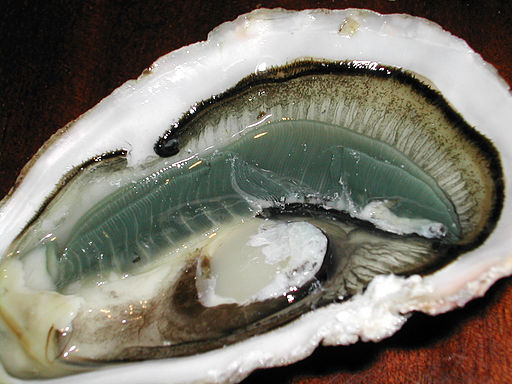

A real monster shouldn't make you think, "That wouldn't be bad fried and served with sides of cole slaw and cheese grits."
1. He really seems to have had some sort of deep-seated fear of the sea life. Most of his monsters live in the sea or have physical characteristics that seem to be inspired by sea creatures. Cthulhu and Dagon may be the most "human-like" of his monsters, but Cthulhu has tentacles and Dagon is explicitly "half-fish". The "Old Ones" of The Mountains of Madness sound basically like sea cucumbers stood upright and provided with wings and (again) tentacles, and the shoggoth sound vaguely like box jellies -- which, oddly enough, have true eyes.

Most people, however, would not react in a Lovecraftian way. We may fear jellyfish, but only because they may sting us; we are not driven insane by the mere fact of their existence. If we could go back in time a half billion years, we would find creatures in the sea that would look to anyone but a specialist like some of the jellyfish found today -- but this inspires only mild curiosity, not existential despair.
2. In addition to his odd hang-up with sea life, Lovecraft seems to have been completely unaware of what really does make for an unsettling image. Of course, he can't really be blamed for not having a fully developed idea of the "Uncanny Valley", but even before that name was coined many artists and writers had a strong intuitive feel for it.
So, for example, look at these dolls. They're pretty, charming, and, at least to me, kind of creepy.

Storytellers have known this for years; it's why there are so many stories about haunted dolls, some of which are claimed to be true. No, I am not saying that these claims really are true, but the fact that they can be presented as such with the expectation that they will be believed and the fact that they in fact are accepted by a number of people are indications that these are touching on something in our common psychological make-up. No doubt magical dolls, like the ones famous from Voodoo, have a similar origin.
So what kind of monsters does Lovecraft give us? Are they soulless parodies of human beings? Are they manlike enough to make us first think they really are human, only some indefinable property is vaguely wrong, hinting that the spirit animating them is not, after all, human? Nope; they're more likely to be colossal (and aeons-old!) shucked oysters, with all their sliminess and seeming formlessness, or perhaps a scallop without its shell, as implied by the presence of odd eyes.


A real monster shouldn't make you think, "That wouldn't be bad fried and served with sides of cole slaw and cheese grits."
Wednesday, June 13, 2012
H.G. Wells, The Outer Limits, and Contemporary Culture

Several years ago I bought a collection of all the short stories written by H.G. Wells. They were entertaining, of course, but aside from the ridiculous caricatures of scientists (particularly in "The First Men in the Moon"), a serious flaw became obvious as essentially the only theme explored in his stories: the denial that man has a nature that sets him apart from the rest of the animals. G.K. Chesterton dealt with this flaw much more charity than I am inclined to show, noting, "His philosophy in some sense amounts to a denial of the possibility of philosophy itself. At least, he maintains that there are no secure and reliable ideas upon which we can rest with a final mental satisfaction."
The same thing was evident when I saw The Outer Limits, particularly the new incarnation of that series. Once again, every episode seemed to be about how human beings aren't at all special, we're just like dogs and cats, or maybe cattle, or maybe mosquitoes. The writers somehow failed to pick up on the fact that this makes for really uninteresting stories. It may be true that in an episode of Gunsmoke one could always be sure that Marshall Dillon would come out on top, the only question being how, but at least one got the feeling that both Marshall Dillon and the ideas he represented really mattered. The Outer Limits was just as predictable, only the human protagonist was guaranteed to fail, and the "moral of the story" was that none of the characters or ideas mattered a whit. If that's the case, why should anyone bother watching? The ideas that all life on earth is doomed to extinction, that the earth itself will be vaporized in a few billion years when the sun goes through its giant phase just before its fires are extinguished and it begins the slow process of cooling to absolute zero, and eventually the Heat Death of the Universe will destroy all matter and meaning -- all these ideas can suit a certain mopey blue mood, but they don't make for gripping drama.
This is not to deny that there is a role for stories that, for example, rebuke mankind for being less faithful than a loyal hound, or for the heart-rending stories of elephants clearly grieving for their dead. However, far from dismissing the importance of loyalty or the loss of death, they reinforce it; they do not suppress human nature, they elevate the nature of certain animals. There is a qualitative difference.
It seems to me that the preoccupation with denying the reality and importance of human nature can be explained in large part by the desire to reject our natures and re-invent ourselves. This is what I meant in my earlier post about Psalm 100:3. This is evident not only in the "gay marriage" movement -- the number of active homosexuals, let alone those who wish to enter into some kind of "gay marriage", is far too small to explain the changing political environment unless this has something to do with the desires of those who are not homosexual -- it is also visible in the push for using human embryos as experimental matter. Modern man is like Brother Cavil from the re-imagined Battlestar Galactica, unhappy and angry at the fact of his own creation and willing to do terrible things as a result.
Tuesday, June 12, 2012
The Crystal Cathedral
Last Saturday Bishop Tod Brown renamed the Crystal Cathedral, the well-known location of the "Hour of Power" televangelism program, to Christ Cathedral.
Because the design of the building is quite different from that of a traditional Catholic Church, and because the cost of maintenance will be so high, at first I was quite skeptical of the wisdom of this purchase. Last night, though, I chanced across a passage in Chesteron's The Catholic Church and Conversion which presents the situation in a different, and more poetic light:
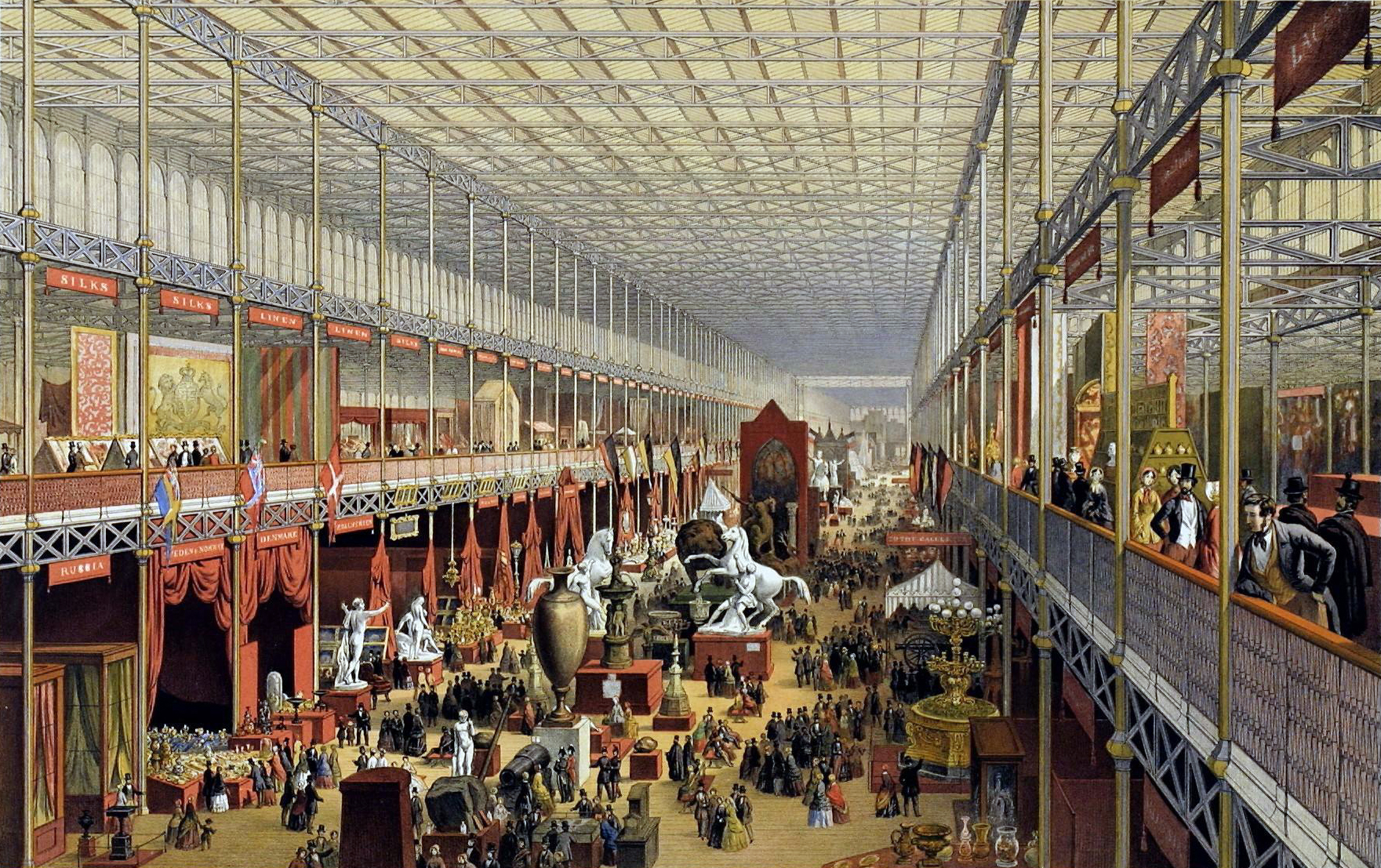
Because the design of the building is quite different from that of a traditional Catholic Church, and because the cost of maintenance will be so high, at first I was quite skeptical of the wisdom of this purchase. Last night, though, I chanced across a passage in Chesteron's The Catholic Church and Conversion which presents the situation in a different, and more poetic light:

Now conversion consists very largely, on its intellectual side, in the discovery that all that picture of equal creeds inside an indifferent cosmos is quite false. It is not a question of comparing the merits and defects of the Quaker meeting-house set beside the Catholic cathedral. It is the Quaker meeting-house that is inside the Catholic cathedral; it is the Catholic cathedral that covers everything like the vault of the Crystal Palace; and it is when we look up at the vast distant dome covering all the exhibits that we trace the Gothic roof and the pointed windows.
Subscribe to:
Posts (Atom)